
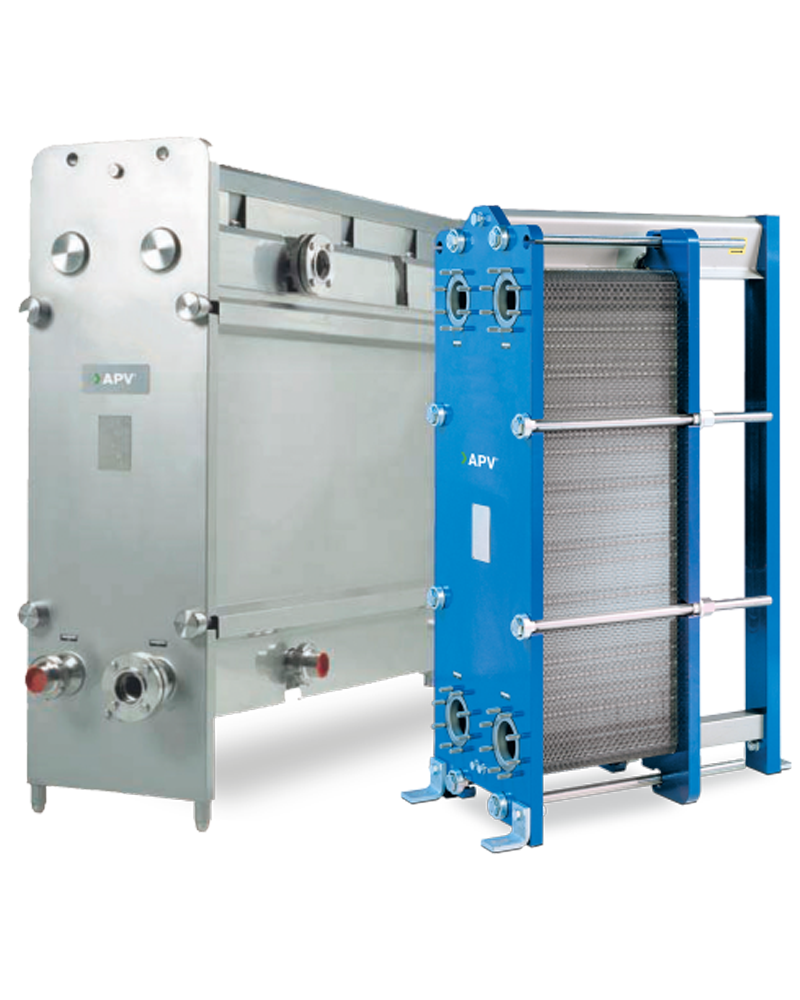
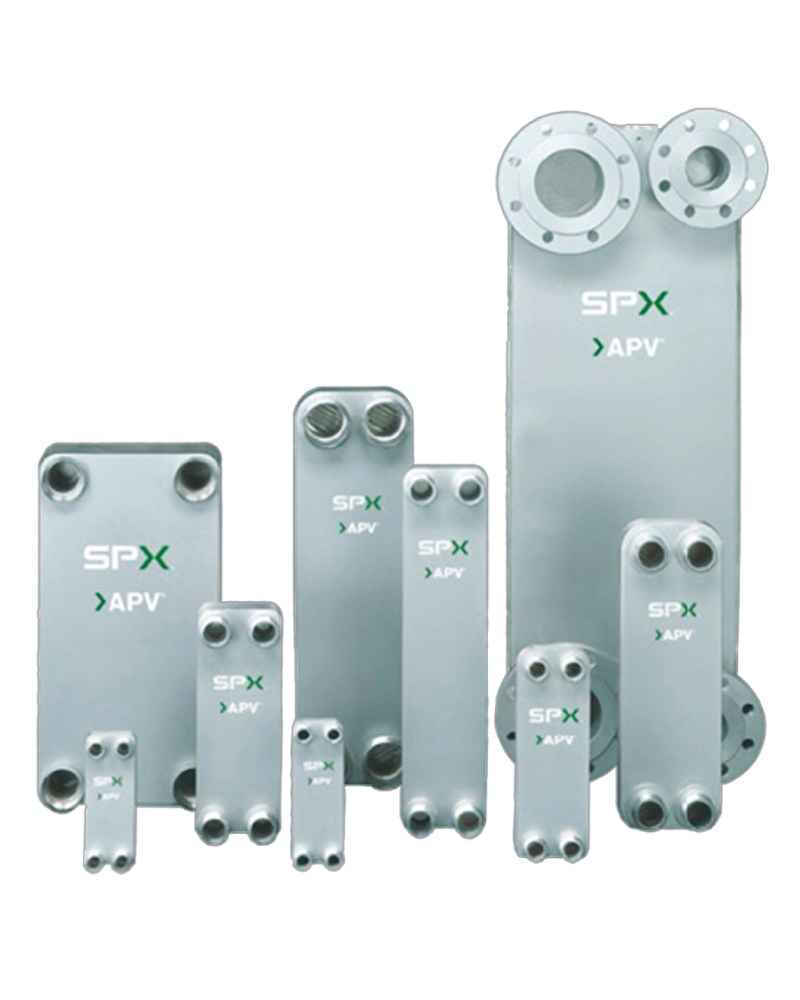
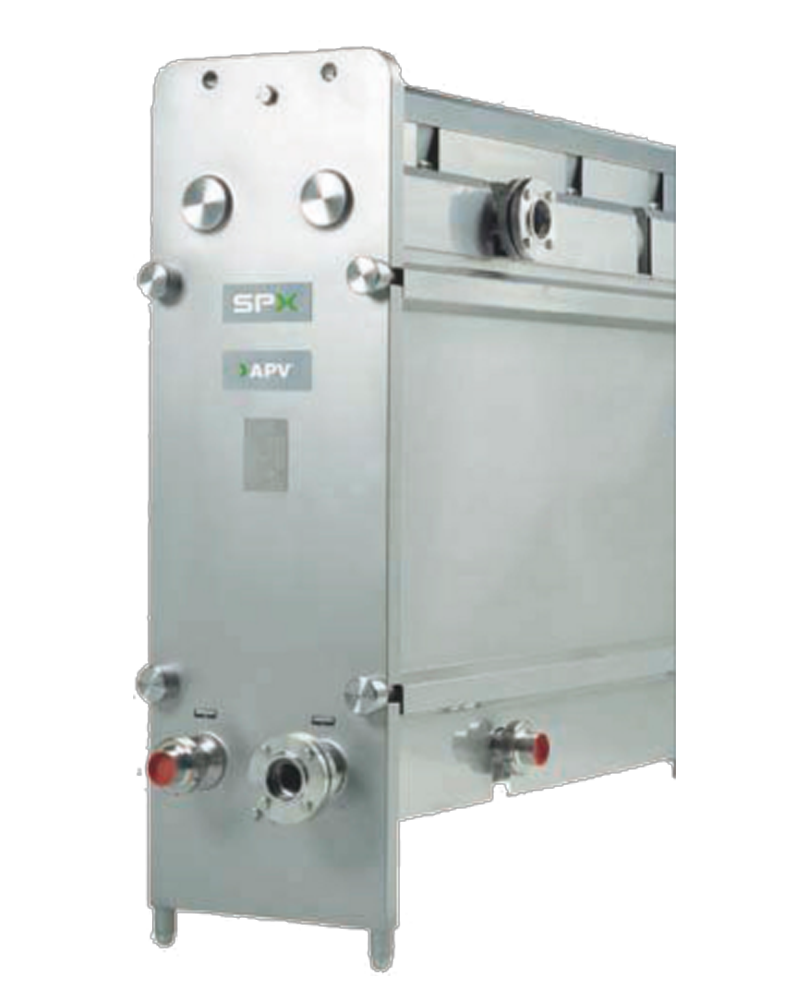
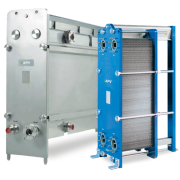
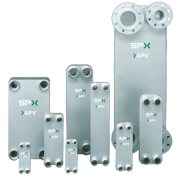
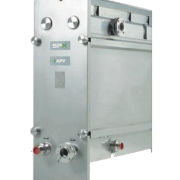


APV Plate Heat Exchangers is selected for heating, cooling, condensation and evaporation duties in hygienic and industrial processes. It matters where equipment choice affects product quality, uptime, cleaning effort and operating cost. The exact configuration should be matched to the medium, duty point, utilities and plant layout rather than selected by series name alone. The 2026 lifecycle material treats APV Plate Heat Exchangers as part of the current APV portfolio.
Corrugated metal plates form separate hot and cold flow channels; the plate pattern promotes turbulence and heat transfer while keeping the fluids separated.
Verified source data for the APV plate heat-exchanger range includes flow up to 4,500 m³/h, pressure up to 25 bar and temperatures from -35 °C to 200 °C, depending on configuration.
From a total-cost-of-ownership perspective, correct selection, planned inspection and access to the right OEM wear parts help reduce avoidable downtime and replacement risk. AxFlow can support model identification, specification checks, service planning and availability guidance for APV Plate Heat Exchangers. For older installations, AxFlow can also help assess whether continued service or a current replacement platform is the better lifecycle decision